Showing posts with label Movies. Show all posts

Saturday, January 18, 2020

Weathering With You, or The Portrait of the Artist as a Questionable Storyteller

Image result for weathering with you
On the way back from the movie theater, I googled Weathering With You to get to the Wikipedia page, a page I'd been avoiding until I saw it. The first result I saw above my desired destination was the headline for a review that read "Weathering With You is as light as a cloud." If I had opened the link, which I didn't, I'm sure I would have found the author praising the movie for being pleasant and breezy, like a spoonful of sugar... or this song:

You are my sunshine, my only sunshine
You make me happy when skies are gray
Please don't take my sunshine away...

In no way is that sentiment true.

Not only are the characters weighed down by hard luck and loss, and the narrative by its searing desire to say something profound, but the movie and Makoto Shinkai, himself, are caught underneath the pop culture behemoth that is Your Name. The latter film was always going to be referenced. Its artistic and storytelling brilliance and its widespread commercial success were too big to ignore. The hope was that Shinkai would tell the story he wanted to tell and sweep the audiences off their feet with his unrivaled animation quality and talent (the animators at ComixWave deserve a lot of credit here, certainly more than this parenthesis). 

That, unfortunately, did not happen. The film cannot be separated from Your Name in terms of its structure and Shinkai's conspicuous attempts to make the film breezier by trying to create a roguish set of main characters who try to work outside the system. He is not a natural crowd-pleaser and it shows.

What I cannot and will not criticize, however, are the film's artistic qualities. Tokyo feels so pulsatingly alive, captured in a way even a live-action movie could not equal. Shinkai and his animators continue to up the ante on the rest of the industry. The attention to detail is breathtaking, leaving us with a visual masterpiece. The fireworks scene...just wow.

Ah, if only the story was even a few notches below this, we're talking about another all-time classic, but it wasn't. The story and the characters left much to be desired. The former, in many ways, is a slight adjustment to the ingredients that made Your Name so successful: boy meets girl with younger outspoken sibling, rural vs. urban, a supernatural connection, romance, death, reversal, and, yes, boob jokes. Structurally, the plot is a little more streamlined, but the framework is essentially the same.

The boob jokes may have worked in Your Name because they weren't a crass way to appeal to adolescent sexuality. Here, they fall in line with one of anime's worst instincts, the cynical belief that teenage boys are the primary audience and will only watch if the female characters are objectified. This is where Miyazaki, Takahata, and Studio Ghibli in general, along with Mamoru Hosoda, differ from the crowd. You'd think Shinkai would know better.

Puzzling me the most is the rationale behind the characters. I don't understand why they have to be the people they are, especially the main character, Hodaka. His status as a runaway who fled his more parochial hometown because it was "suffocating" does nothing for the story.

What we are left with is a true technical and artistic marvel matched with a mediocre story. Sadness.

Monday, April 29, 2019

Avengers: (is this really the) Endgame(?)


 Image result for endgame poster
I’ll get this out of the way first: Endgame gets fan-service-y at times. If Marvel and Disney know anything, it’s giving audiences some fulfillment or vindication of their fandom. Does that create a few plot holes? Probably. Are there now question marks in the MCU continuity? Most definitely. Does this make the movie any less entertaining?

Not at all.

For those of you concerned about spoilers, rest assured, you won’t find any in this review. I’ll keep everything to a general knowledge level.

Following last summer’s colossal defeat to Thanos, an Avengers team whittled down to the core group tries to fight back in the hopes of restoring life to half the universe. The mission is not as simple or direct as it may initially seem.

Despite running over 3 hours, the film doesn’t feel overburdened or overstuffed in the way a Michael Bay explosion-fest would. The Russo Brothers understand the universe they’re working in. They get the pacing spot on. The story is always in motion, except for the occasional pause to contemplate the past and the future.

The balance between humor and darkness does not feel forced like it does in Captain Marvel. No one’s falling over backwards trying to throw in a snarky quip that unravels the tension. The Russo Brothers let the tension build when tension is needed. Humor often comes in throwaway lines and little observations. I think they understand that not everything needs to be given the Ragnarok treatment.

Performances, for the most part, are hard to judge. At this point, Chris Evans is Captain America and Robert Downey Jr. is Iron Man. The only time we notice anything is if something goes against our understanding of the characters. That’s true for the rest of the roster, as well. If there is a standout, it’s probably Hawkeye. Jeremy Renner has mostly had to stand around looking cool and shoot arrows at the bad guys. He actually acts this time. Gasp. His story is among the more emotional arcs in the MCU.

In a lot of ways, Endgame is like Harry Potter and the Deathly Hallows, Part 2. Many long-running arcs are wrapped up in an entertaining and satisfying fashion. The only complaint I have is in the final battle. There are too many moving parts, too many CGI aliens running aroundand the camera shifts through the scene to the point where it becomes a kinetic blur. The best fight scenes in the series have been in Captain America movies. They’re not glorified light shows. The battlefield has a physical presence and locations matter. I know it would’ve been a challenge to bring that to a larger scene, but Cobra Kai’s Season 2 finale did it, so no excuses.

Endgame is the most enjoyable 3-hour movie I’ve seen. It’s a celebration of an 11-year process that has been unrivaled in Hollywood history, one that will (for better or worse) define the current and future generation of film-making. I may go for a second round, something to tide me over until the next Spider-Man comes out.

(P.S. Marvel, you stole the ending I thought up for one of the characters 8 years ago. I’m suing. Don’t tell me you don’t have mind reading technology. I’m on to you.)

Saturday, April 6, 2019

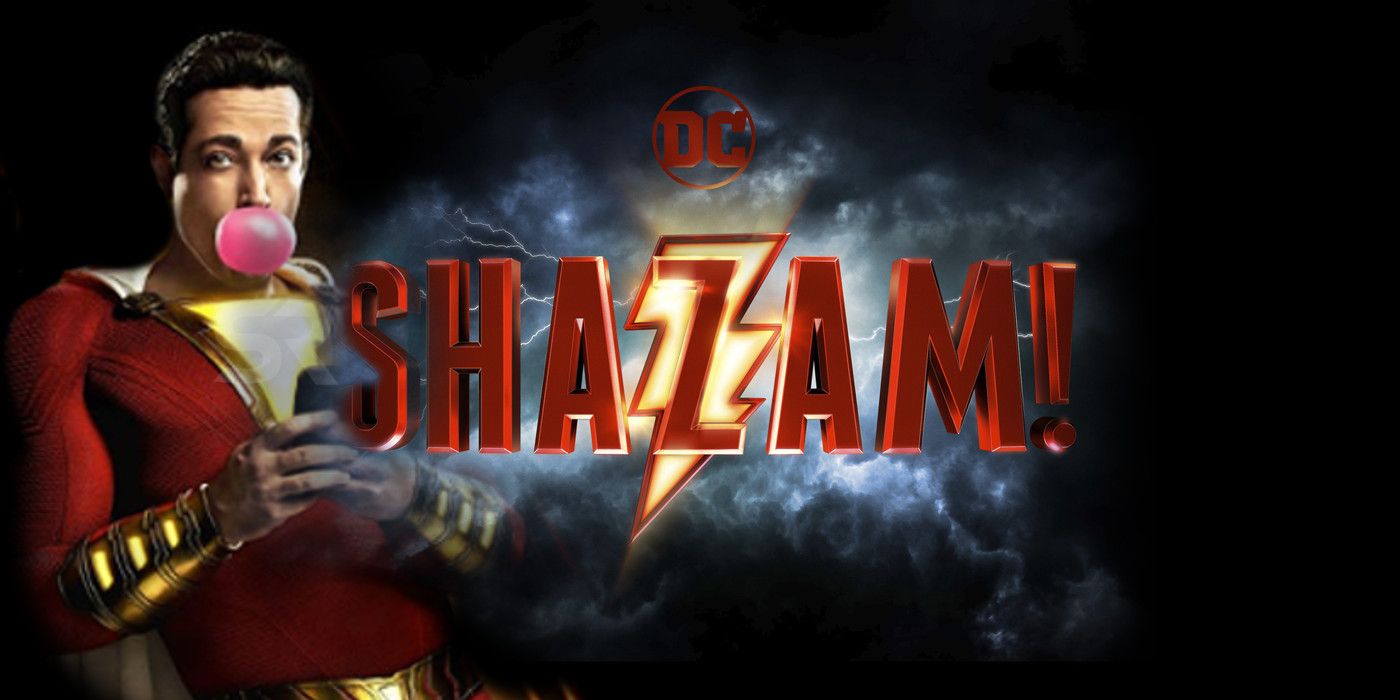
Shazam!, or How Superhero Movies Should be Fun


Image result for shazam

Shazam!

Sorry, had to get that out of the way before I got started.

Shazam! is hopefully a new direction for superhero movies, or a shift back to what the genre’s main calling card was for a long time: a childish (and perhaps naïve) imagination run wild. I don’t know about everyone else, but I’m tired of the brooding, moody superheroes. Just because Christopher Nolan did it so well with The Dark Knight doesn’t mean everyone running around in colorful tights needs to be reincarnated as a wet blanket.

Sometimes, when you go to the theater, you just want to feel like a kid again, not get lost in crappy, oversimplified monologues on the societal reasons villains become villains and superheroes whose lives are destroyed in the process of saving an ungrateful world. It’s supposed to be fun.

And Shazam! has enjoyability in spades.

The plot is simple. There is good magic and bad magic. The former is embodied in the bright red suit and giant lightning bolt of Shazam, while the latter is delivered in the shape of the Seven Deadly Sins, who latch onto a devilish Mark Strong (I foresee further bad guy roles for him in the future). The two square off for supremacy.

Throw in a downtrodden teenager, an orphan seeking his mother, connecting with his new foster siblings and we have all the watermarks of an origin story.
The movie’s charm comes from the answer to a question kids may ask from time to time: What would you do if you had superpowers?

Easy. Test them out and show them off.

There is no shortage of humor coming from Billy Batson’s (Asher Angel) initial response to getting his powers. He and his foster brother, Freddy (Jack Dylan Glazer), conduct multiple tests to figure out just how strong he is. They even engage in a little neighborhood do-gooding. Zachary Levi’s performance could not have been better. He sells the childlike whimsy perfectly.

That question returns again and again throughout the latter half of the movie. The answers are, without fail, golden.

What also helps is a very likeable cast. They all seem a natural fit for their roles. I particularly enjoyed Ian Chen’s (Evan in Fresh Off the Boat) performance as one of the foster family. He’s an avid video gamer and not averse to making a Bruce Lee reference.

Kudos to the director, David F. Sandberg, and to the writers, Henry Gayden and Darren Lemke, for embracing the nerdy and childlike atmosphere without sacrificing the heartistic elements. A job well done.

Friday, March 8, 2019

Captain (Almost) Marvelous

Image result for captain marvel poster
Let's do a little math. Confident hero + diverse cast + political relevance + lighthearted banter + story about displaced peoples + strong women = success...right? Considering that all those elements put together form the heart of the MCU's best outing so far, Thor: Ragnarok, yes. The movie blended them together in a seamless, nuanced manner. Thanks, no doubt, to Taiki Waititi's assured direction.

Can this formula repeat itself? I don't know. The first test has not been conclusive.

Captain Marvel opts to repeat the quirky balance between someone in pain struggling to find themselves and maintaining a light and breezy atmosphere. Hell, if we can laugh at someone faceplanting out of a plane when an entire planet is being destroyed, we can certainly laugh at a digitally de-aged Samuel L. Jackson (good luck young actors on breaking through when we can make him and Kurt Russell looking 20-30 years younger without being too noticeable) cooing at a cat in the middle of an important mission.

Well...

I hate to say it, but I think Ragnarok is a bad influence. Opting for humor over tension can be rewarding sometimes. It can also be, meh. Waititi's a great comic. Laughs are his bread and butter. Not so much with the five credited writers on this film. At moments, it's like watching a sitcom without the laugh track. Oof.

What we get, then, is a weird shallowness that is 100% at odds with Carol Danvers's emotional journey. The tone never quite matches the moment. That's unfortunate because Brie Larson knows how to act. She sells the role to the best of her ability. She can't do it alone, though.

The scattered tone feeds into the film's other aspects.

I believe the directors were told to go all in on telling a positive, heartwarming tale about a free-spirited woman who shakes off the shackles of her male oppressor. She has a mind of her own, and she's not about to take crap from anyone. That's awesome. It's an attitude we need to see more often.

Yet, because of the film's aversion to emotional nuance, her struggle does not feel tense or hard or much like a conflict at all. Storytelling needs pain like an Olympic sprinter needs fast-twitch muscles. Without pain, how are we going to care about someone who is essentially an all-powerful being? We know she can beat her enemies in a flash.

All it would've taken was a slight shift away from playful banter towards tension. Just a handful of changes keeps an uneven yet enjoyable flick from nesting in alongside the franchise's best installments.

That said, maybe the world needs a movie where the end is never in doubt, where a woman can buck the system, where unjustly criminalized people can have a hero that leads them to the promised land. Maybe that's where we are right now.

Thursday, August 16, 2018

Crazy Rich Asians Isn't So Crazy After All

Crazy Rich Asians poster.png


Rich guy and not-so-rich girl fall in love and encounter obstacles including but not limited to: unwelcoming family members, elitism, classist assumptions, and that douchebag everyone hates. Let's be honest, we've all seen some iteration of that story. Some may say they liked it better when it was called Pride and Prejudice or Cinderella. The point is: Crazy Rich Asians is nowhere near crazy where the storytelling is concerned. 

Don't get me wrong, romantic comedies work partially because of the paradigm and because of the familiar situations the characters get put into. They're like coming home after an 8-hour shift at the office and seeing your cat mark the shoe-rack for the umpteenth time. You've grown accustomed to it. Memorable romcoms, however, have distinct characters that you remember long after the movie has ended.

Crazy Rich Asian doesn't even have that. 

Take Nicholas Young (Henry Golding), for example. He's an intelligent dude. He was born into a rich, elitist family, but he's nothing like his family. Rather than a snob, Nick has become an all-around good egg, a nice dude who is head over heels in love with his girlfriend and wants the relationship to go to the next level. His defining qualities are his billion dollar smile and a heart of gold. 

Those traits don't sound overly unique. 

Rachel Chu (Constance Wu) has a little more substance to work with, but even she is bogged down by certain genre tropes. When it's all said and done, she's the hardworking girl with the gumption and the fight to prove to her boyfriend's family that she is more than good enough for their son. 

Both characters' traits point to a common theme in romantic comedies -- the leads are usually the least interesting people. The entertainment comes from the surroundings, the situation, and the colorful supporting cast. That's what happens here. 

Jon Chu sets up lavish sequence after lavish sequence. He takes us from the night market to an upscale hotel to McMansions to a private island and to that douchebag shooting a bazooka off a ship into the ocean. The pacing is quick. The movie doesn't get bogged down by explaining the details behind everything in the family dynamic. 

Michelle Yeoh, primarily known for her work in Crouching Tiger, Hidden Dragon, and other martial arts films, puts in the strongest performance as Nick's traditionalist mother. She provides a necessary counterbalance to the laid-back ease and open-mindedness of other members of her family and has just enough nuance to keep the character from falling into the hard-line generic Chinese mother role. Gemma Chan, as Nick's cousin and his and Rachel's confidant, also adds poise to the screen.

For the off-beat and quirky stuff, Awkwafina and Ken Jeong and the cousin who is always concerned with "optimal angles" have you covered. Like anything in that brand of humor, it can be an acquired taste and is often hit-and-miss. 

It's pretty clear that Crazy Rich Asians isn't pushing any storytelling envelopes. It's slick, it's efficient and adequate entertainment. 

Asian leads and Asian faces, however, make the movie an outlier. Seldom does Hollywood give Westernized Asian actors a chance to be the romantic heroes. The project is a major step forward for Asian representation in Hollywood. That is this movie's primary value. Its success will open doors for more movies, and most certainly, better ones. 

If this leads to Hotel On the Corner of Bitter and Sweet (do yourself a favor and read the book) finally getting the green light, an Asian-led live-action version of Your Name, and adaptations of Native Speaker, Chinglish, and other purely original projects (maybe one of mine lol), then Crazy Rich Asians will have done its job. 

(P.S The book is 300% better than the movie.) 

Tuesday, May 1, 2018

5 Japanese Animated Movies You May Have Missed (and Shouldn't Have)

Until recently, my knowledge of anime was limited to Dragonball (AAAAAAAHHHHHHH!!! Damn it, still not a Super Saiyan.) and the most high-profile films directed by Hayao Miyazaki. Then, Dragonball Super ended. The series left a bad taste in my mouth, especially the Goku Black/Infinite Zamasu saga, so I decided to see what else the Japanese canon had to offer.

I could make a list of the five best, but they would all be Miyazaki films and that's no fun, so I made this instead.

1. Whisper of the Heart (1995)

Image result for whisper of the heart moon

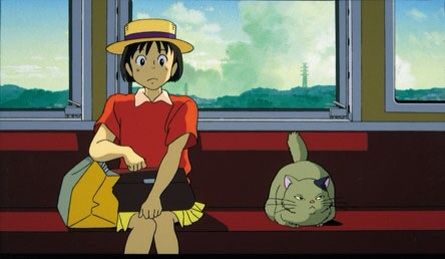
Animation often takes us on a magic carpet ride through a fantasy world. Minus a dream sequence or two, this film - written by Miyazaki and directed by Yoshifumi Kondo - has its feet firmly planted in reality. The attention to detail and observational representation is second to none, and the story of Shizuku Tsukishima, a 14-year-old girl trying to find her way as a writer, is carried out with remarkable competence. You might call it a fairy tale wrapped in reality. The urban world springs to life. Whisper of the Heart's strongest quality lies in the development of its characters. Every single one, from Shizuku to Seiji (her love interest) to her family members to her classmates and even to the cat riding on a subway car, is an individual with distinct traits. Each is on their own individual journey. Where those journeys overlap is the heart of the film.

I can't tell you highly I rate this film. There are not enough superlatives in the English language. I hadn't seen it until a month ago, and it is without a doubt my favorite animated movie. It may very well be my favorite movie...period. To quote The Sound of Music, this movie is "a drop of golden sun."

2. In This Corner of the World (2016)


Image result for in this corner of the world


Like their American counterparts, Japanese filmmakers often tell stories about World War II. Unlike Americans, the Japanese don't glorify themselves in the process. Their stories, for the most part, deal in defeat and tragedy. Grave of the Fireflies (1988) remains the prime example, though In This Corner of the World offers a different, and perhaps equally affecting, look at this period. To begin with, the art style is brilliant. All of it is hand-drawn, a rarity in today's CGI-dominated industry, and the result is stunning. The visuals provide an added depth to the story, which follows Suzu, a small-town girl with a talent for drawing. She is given in marriage to a young man and joins his family's household. The war and the constant threat of American bombers hang over her life. Everything comes from her perspective. As such, the movie begins and ends with the nuance and careful attention the filmmakers give to developing her character and the world she sees.

This one is the opposite of Whisper of the Heart. It's a heartbreaking tale, a character study of an individual who has much to offer the world, but not given the opportunity or allowed the agency to pursue her talents. Watching this (and Grave of the Fireflies) changed how I see war movies, though to define In This Corner of the World as simply a war movie would be to limit its scope.

3. Your Name (2016)


Related image

This might be stretching the "you may have missed" part a bit since it made a lot of money, but I'm including this instant classic anyway. The film's director, Makoto Shinkai, does not have a high profile distribution deal with an American studio, like Studio Ghibli and Disney, so his work may go largely unnoticed here in the United States. That needs to change, ASAP. Shinkai's talent and skill are off the charts. Your Name is exhibit A. The animation quality is unbelievable. Some scenes seem to be there just to show off how beautiful it is to look at. Also, the story of a rural girl and an urban boy who, for some odd reason, start switching bodies checks all the boxes where construction is concerned. It moves forward at a brisk pace and contains solid humor, welcome changes to Shinkai's usual brooding, melancholic meditations on the pains of modern Japanese life.

If Shinkai can delve deeper into his characters and truly bring them out as unique individuals, then he will be the one to pick up Miyazaki's mantle as the best filmmaker in Japanese animation once the old master retires for good. Everything else he does is damn near untouchable. Your Name is the best thing he has done so far and definitely deserves your time.

(Note: Your Name will be a household name in the near future. J.J. Abrams has a live-action adaptation in the works. Here's hoping the man behind many a sci-fi epic doesn't drop the ball.)

4. Summer Wars (2009)

Image result for summer wars

Tell me if you've heard this story before. A teenage boy who seems unappreciated and doesn't know what he wants to do is forced into saving the virtual realm from falling into the hands of a nefarious enemy. Yes, I'm referring to Ready Player One - both the book and the movie. That story occupies a spot in the current pop culture consciousness, but Summer Wars predates the book. Mamoru Hosoda, another pretender to Miyazaki's throne, did it first (obviously, there are differences). The movie is a lot of fun and appears to have a sense of the ridiculous (the bad guy is called "Love Machine"). Its flaw, however, lies in the character development. There are too many characters who don't serve much of a purpose.

Action is cool. Stories about artificial intelligence and the future of the internet as the world's marketplace and a social sphere are in vogue. This should tickle that fancy. Also, watch it to see how it stacks up against Ready Player One. You might find out that it's that much better.

5. Only Yesterday (1991)


Image result for only yesterday

An animated film geared towards a serious adult sensibility, Only Yesterday plays like a product on the indie circuit. It tells the story of Taeko, a young woman who takes a trip to the countryside to pick safflowers the old-fashioned way. She also tackles the personal demons she's faced since the fifth grade, initiating flashbacks to key events from that period in her life. The film moves along at a slow pace, giving the audience time to breathe in Taeko's internal conflict and the scenic countryside that surrounds her. In a way, the movie serves as a love letter to agriculture and a world being left behind by a technologically oriented society, as it attempts to convince the audience that there will always be a place for farming despite the difficulties the industry faces.

In an alternate universe, this Studio Ghibli product would be as well known as the best of Miyazaki's work. Isao Takahata, a co-founder of Studio Ghibli, shows that animation isn't just for kids. It's flown under the radar and only recently received an English dub (featuring Daisy Ridley, no less), but few movies depict the "child is mother to the woman" (an inversion on a Wordsworth line) relationship so well.

---

Given that two of these are Studio Ghibli and one is from Makoto Shinkai, some people may find the list too mainstream, but films not made by Hayao Miyazaki and aren't Spirited Away often get overlooked, especially in America.

Feel free to leave a comment below and follow @WinBribach on Twitter.